
Best Free Walking Tours in Salamanca
19 tours in Salamanca, Spain, in English and other languages







1,772 Reviews in Salamanca
What is the typical group size for free tours?
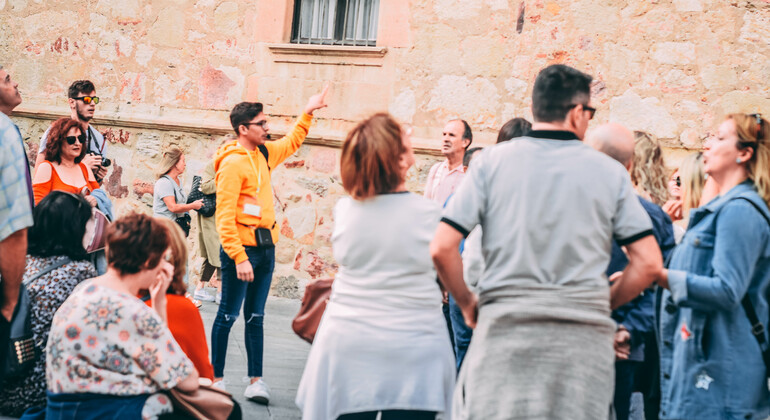
Usually, guides recruit groups of 6-10 people. However, in some cases, the number of participants may be larger. You can always check this information on the tour description page.
Can I find out about any local legends or myths that are unique to Salamanca during the tours?
Sure. You can even take a specialized tour like “Free Tour Legends and Mysteries of Salamanca” where you will learn about urban legends and mystical stories.
Are there any free tours that delve into Salamanca's literary history and famous authors?
Unfortunately, there are currently no such tours on our list. However, you can periodically monitor our updates - perhaps guides will conduct a similar excursion in the future.
How do guides ensure that visitors respect local customs and traditions during the tours?
Our guides should always explain the need to respect others and local traditions during the tour.
Are the tours accessible for people with mobility issues?
There may be steps or other obstacles along the route, so you should check this information on the tour description page or check it with our support team.
Salamanca Free Tours at a Glance
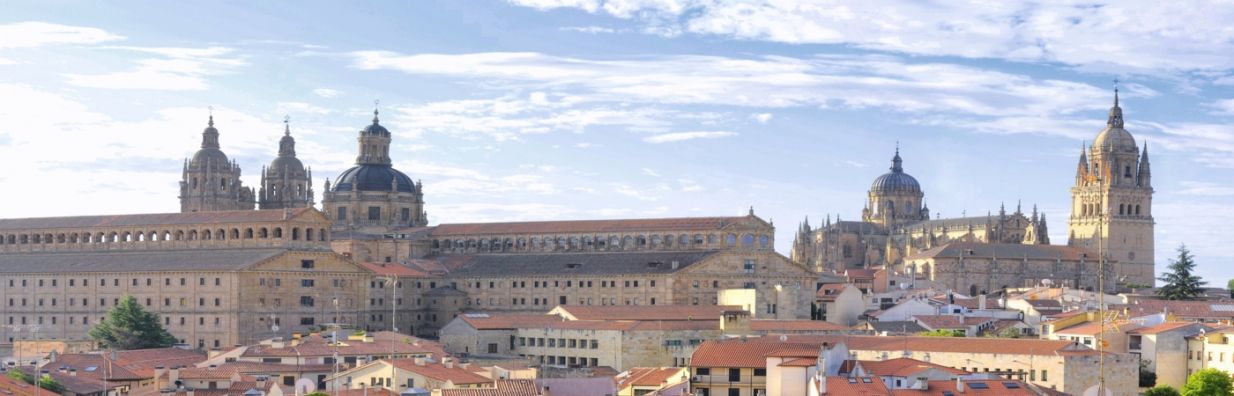
The entire city of Salamanca is nicknamed "La Ciudad Dorada" (The Golden City) due to the unique type of sandstone found in the area, known as Villamayor stone. You can wander around on your own, trying to figure out what you're looking at. Alternatively, you could book a free walking tour in Salamanca on FREETOUR.com, where a local guide shares their knowledge with you on a tip basis. Like, where to find the hidden frog everyone's obsessed with, or which bars do the best tapas.
Why Choose a Local Guide Over Wandering Solo?
Salamanca isn't massive, but you'll absolutely miss the good bits wandering solo. This is where free tours in Salamanca actually come to help. Your guide's either born-and-raised local or someone who came for a semester abroad five years ago and never booked a return flight. Happens more than you'd think. They'll send you to the spot doing proper hornazo and break down why students keep doing these medieval traditions.
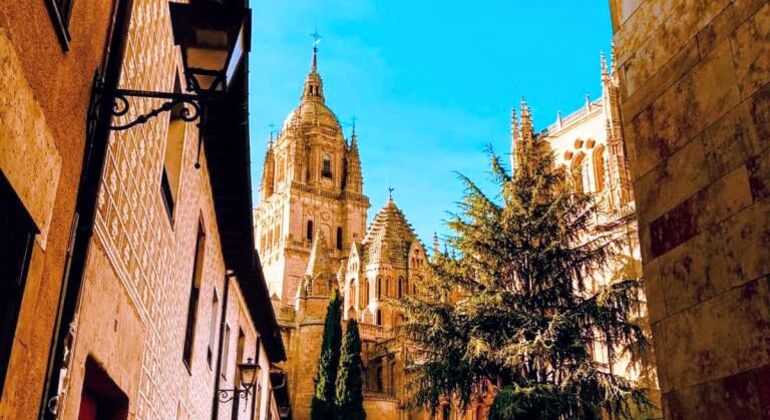
What is the golden-hour thing everyone photographs? That's Villamayor sandstone being weird with light. Different absorption rates from regular stone mean the whole city genuinely glows amber at sunset. No filter needed. Your guide knows the exact corners for it.
Post-tour, you've mentally mapped everything. Return to Plaza Mayor later for people-watching with a drink. Linger at Casa de las Conchas, as that mansion is plastered with 300+ scallop shells.
La Rana (the lucky frog)? Tiny carving buried in the university's Plateresque facade among hundreds of others. Legend claims spotting it yourself means exam luck. But on walking tours in Salamanca, your guide will tell you where it is hidden.
Top Sights You'll See on a Salamanca City Tour
Every walking tour in Salamanca hits the main spots, but how deep they go depends on your guide. Some are really into architecture, others are all about weird historical stories. Either way, here's what you're looking at:
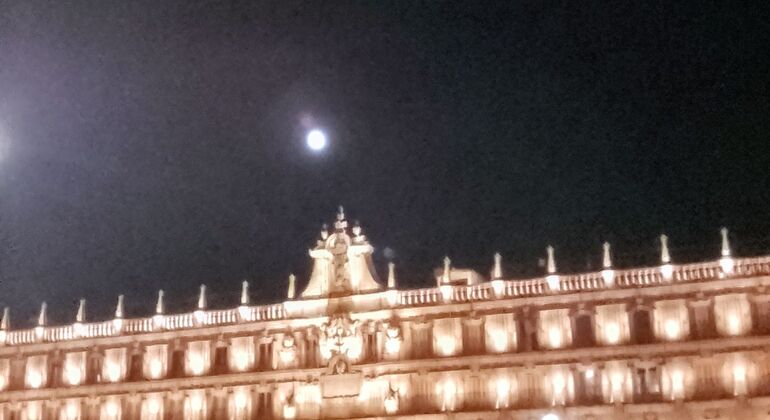
- Plaza Mayor. It is usually where you start or finish. And it's one of the most beautiful squares in Spain. Built in the 1700s, it's got these three-story buildings all the way around with arcades underneath where the cafés and shops are. The square's still the center of everything. People meet here, students celebrate here, and old guys play chess here. In summer, the outdoor tables are packed until late. Your guide will show you the medallions with Spanish royalty and explain how this became the model for plazas all over Latin America.
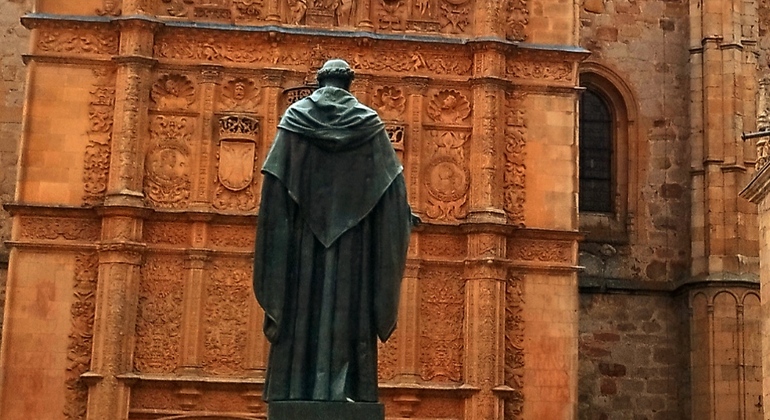
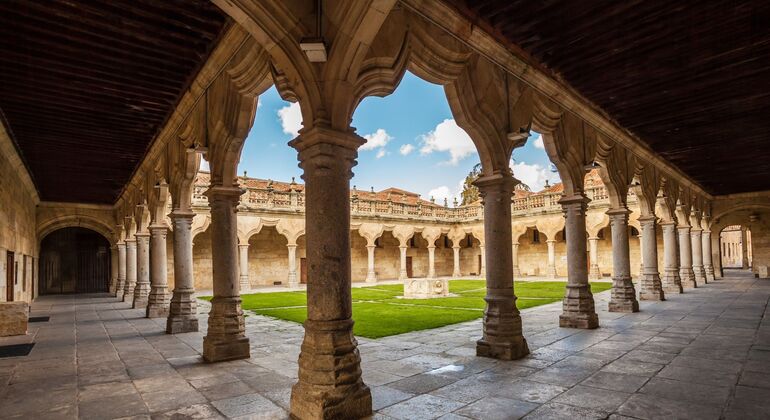
- University of Salamanca. It is what most people come for. Founded in 1218, so it's old. The facade is this incredibly detailed Plateresque style carving that makes you wonder how they even did that with the tools they had back then. And yes, your guide will help you find the famous frog (La Rana) sitting on a skull.
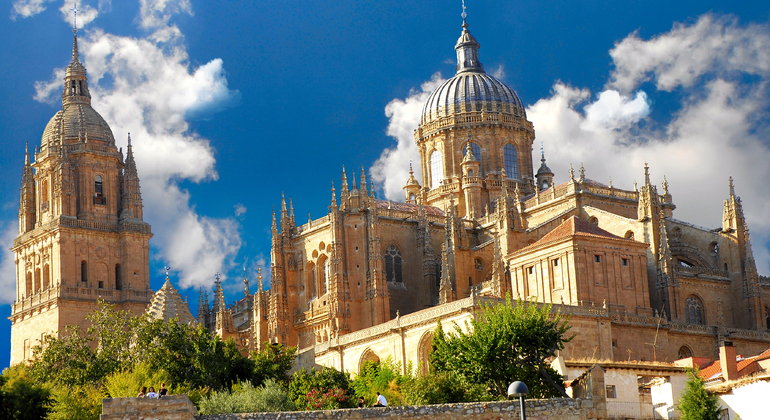
- The New and Old Cathedrals. Most cities have one cathedral. Salamanca has two. These are Catedral Vieja from the 1100s and Catedral Nueva from the 1500s. And instead of tearing down the old one like normal people would do, they just built the new one right up against it. They share a wall. It's architecturally weird and kind of genius. Inside the new one, look for the Astronaut carving. Someone added it during restoration work in 1992 as a little joke, and now it's become this whole thing where people come specifically to see it.
- Casa de las Conchas. It is exactly what it sounds like. A house, covered in shells. Over 300 scallop shells all over the facade because the guy who built it in the late 1400s was really into the Order of Santiago, whose symbol is a scallop shell. Now it's a library and you can walk into the courtyard for free, which is nice.
- Roman Bridge (Puente Romano). If you're lucky and your free tour in Salamanca goes down to the Roman Bridge, go with it. It's a bit of a walk, but crossing the Tormes River on this ancient bridge gives you hands-down the best view of the whole city skyline. Especially at sunset when everything goes golden.
Specialized Walks: Legends, Mysteries, and Night Tours
- The Cave of Salamanca. This is where it gets properly weird. Medieval legend says the Devil himself ran a seven-year magic school in a cave beneath San Cebrián church. Students learned dark arts, and when graduation rolled around, one poor soul had to stay behind forever as a tuition payment. Supposedly, there were tunnels connecting it to the whole underground city. The actual cave's mostly rubble now. But guides milk those stories about famous alchemists and sorcerers who allegedly studied there.
- Garden of Calixto and Melibea. It is tied to La Celestina, which is a big deal in Spanish literature. This little park supposedly marks where the story's doomed lovers met. Pleasant enough during daylight, but on evening free walking tours in Salamanca, guides lean hard into the tragic romance vibes. It hits differently in the dark.
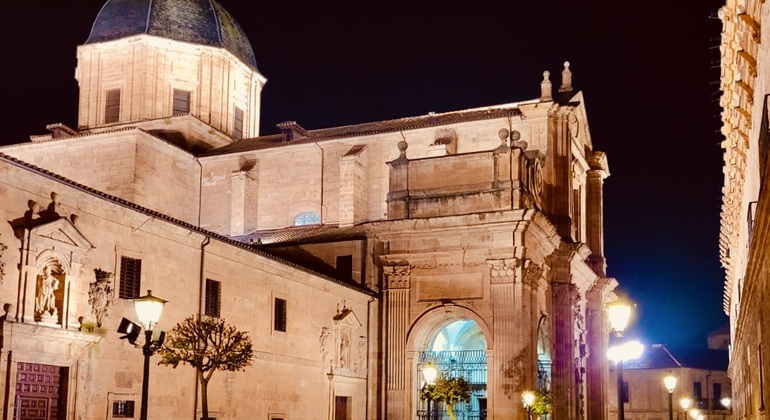
- Night Tours. Salamanca after dark is a completely different animal. Empty streets, strategic lighting making everything dramatic, and suddenly those Devil-student stories don't feel so silly anymore. The Villamayor stoneglows under streetlights in this eerie way that daylight doesn't capture. But there are no crowds and no summer heat. Just you and centuries-old ghost stories told exactly where they supposedly happened.
Practical Tips for Your Salamanca Guided Walk
- Respecting Traditions. The University of Salamanca isn't just a tourist attraction. Students are actually studying there, professors are doing research, and classes are happening. Guides will tell you when to keep your voice down and why certain courtyards might be closed during exams. Just be respectful. These traditions go back centuries, and people take them seriously.
- Small groups actually matter. Most FREETOUR.com guides cap it at 6 to 10 people. You can hear everything, ask weird questions, and the guide can adjust based on what the group's into. Plus, navigating those medieval alleys with 10 people is way easier than with 50.
- Footwear. Cobblestones are everywhere. Some of them are uneven, some are slippery when it rains, and you're walking for over two hours. Wear actual comfortable walking shoes with good soles. Save the cute shoes for dinner.
When Is the Best Time to Visit?
- Spring and fall are your sweet seasons. March to May and September to November offer temperatures in that perfect 15-25°C zone (60s-70s Fahrenheit), the light's amazing for photos, and you're not dying from heat or freezing. Plus, there are fewer tourists outside peak summer, so tours are easier to book and feel more personal.
- Summer is rough. 35°C and up (mid-90s F and higher) in July and August. If you're there in summer, book morning tours before 11 AM or evening tours after 6 PM when it cools down a bit. Yet, the whole city's outside enjoying tapas culture, the student nightlife around Plaza Mayor is buzzing, and the energy's just different.
- Winter's cold, but kind of great. December through February gets down to 5-10°C (40s F), so you need a jacket. But the city's way less crowded, and if you time it right, you might catch the Salamanca Light Festival in January, where they project these incredible light shows onto the cathedral and university buildings.
Book your tour in Salamanca through FREETOUR.com, wear comfortable shoes, bring an open mind, and you'll get why this golden city has been attracting students and travelers for over 800 years.

- Free Tours in 140+ countries!
- Trusted ratings & reviews!
- Free booking 100% guaranteed!
- FAQs about free tours in

Explore more cities in Spain
Read more about Salamanca

Salamanca is a UNESCO World Heritage city in western Spain's Castilla y León region, known for its golden san...
read more


