Best Free Walking Tours in Mexico City
Offering you 81 tours in Mexico City, Mexico




38,760 Reviews in Mexico City
Are the free tours really free, or do I need to pay for them upfront?
The whole point of such tours is that you can leave a tip to the guide at the end at your discretion.
What should I expect in terms of the tour itinerary, and can it change?
You can view the tour route on the tour description page. All the information is indicated there, and in particular each point along the way that you will visit.
Is there a cancellation policy for the free tours, and is it free to cancel?
You can cancel your tour booking at any time. This will not incur any penalties or fines for you. But of course it's best to avoid last minute cancellations before the tour and do it in advance
How do I make a reservation for a free tour in Mexico City?
First, you need to select a tour from the list on our website or mobile application. Then go to the page with its detailed description and select the date and time of the trip there. After that, all you have to do is click on the “Book now” button, and you’re done.
Where is the meeting point for the free tours, and how do I get there?
The meeting point is always indicated in the tour description and is different for each guide. However, these points are always located near central attractions.
Explore a Capital Built in Layers
Mexico City (locals call it CDMX) is really complex. The Aztecs built Tenochtitlan on an island. Spanish conquistadors demolished it and recycled the stones for their own buildings. Modern architects added glass towers over colonial stones. All this means that today, on 2-hour free walking tours in Mexico City, you're literally walking on top of temples while looking at cathedrals, surrounded by skyscrapers. Trying to understand this city without a local guide is like reading a book backwards.
Why Take a Walking Tour in Mexico City?
Mexico City isn't simple. Here's why joining free tours in Mexico City makes the difference between being confused and being amazed:
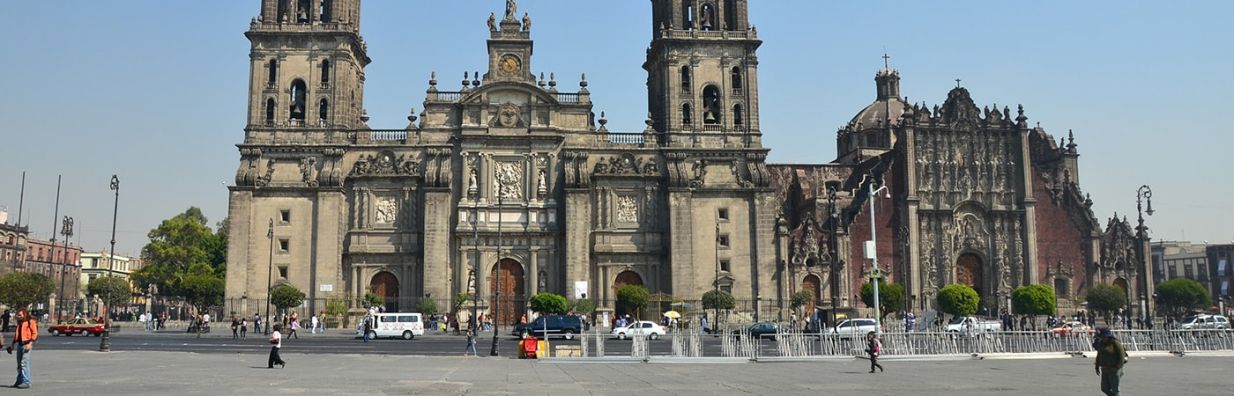
- Contextual depth. You can stare at the Templo Mayor ruins all afternoon, but without knowing that the Spanish literally used Aztec stones to build the Metropolitan Cathedral next door, you're missing the gut-punch irony of conquest architecture.
- Neighborhood clusters. This is a massive city. Tours help you understand that Coyoacán feels completely different from Roma & Condesa, which feels nothing like the historic center. Each barrio can be called its own town.
- Themed exploration. What do you want to see? Want just murals? Just markets? Just Aztec Empire history? Specialized routes exist for everyone. You will not be forced to hear stories you don’t want.
- Flexible logistics. Book an interested tour through the website or mobile app. If you changed your mind, you can use free cancellation anytime without any penalties.
- Easy access. Central meeting points are always near major landmarks. So, you will not wander around trying to find your group.
Mexico City as Four Interlocking Cities
A proper walking tour in Mexico City helps you immerse yourself in four different atmospheres of the city occupying the same geographical space. Here they are:
The Aztec and Colonial Core
Start your free tour in Mexico City, where it all started. We mean the Zócalo. This can’t be called just Mexico's main square. It's the exact place where Tenochtitlan (the Aztec capital) had its ceremonial center. The Templo Mayor ruins are situated right there, showing layers of construction from different Aztec rulers. Then look up. The Metropolitan Cathedral looms over it, built using the same stones the conquistadors pulled from Aztec temples. The Spanish victory was so complete that they literally used their enemies' sacred buildings as raw materials. That's the kind of heavy historical layering that makes Centro Histórico a UNESCO World Heritage site and turns every walk into a philosophy lesson about power and memory.
The Museum and Identity City
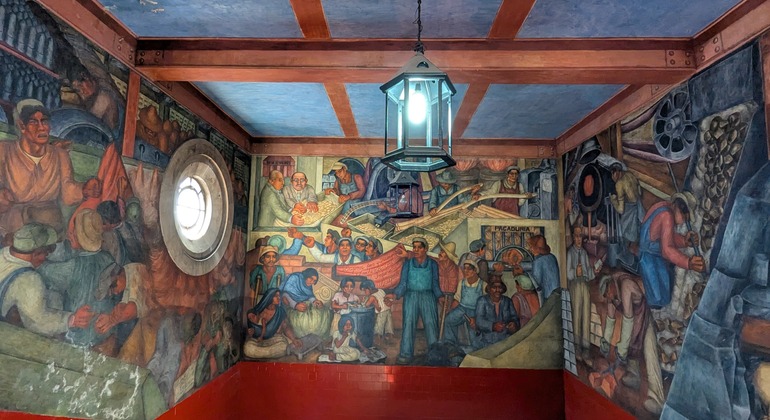
After independence, Mexico needed to figure out who it was. And the answer came through art. Palacio de Bellas Artes stands as Mexico's Art Nouveau and Art Deco palace where Mexican Muralism was born, such as Diego Rivera, Orozco, and Siqueiros painting political manifestos across public walls. These were the revolutionary vision of what Mexico could be. What’s more, the National Museum of Anthropology takes this identity-building seriously, housing pre-Hispanic artifacts in what's considered one of the world's finest archaeological museums. Together, these institutions are the physical manifestation of Mexican self-understanding.
The Neighborhood City (Barrios Mágicos)
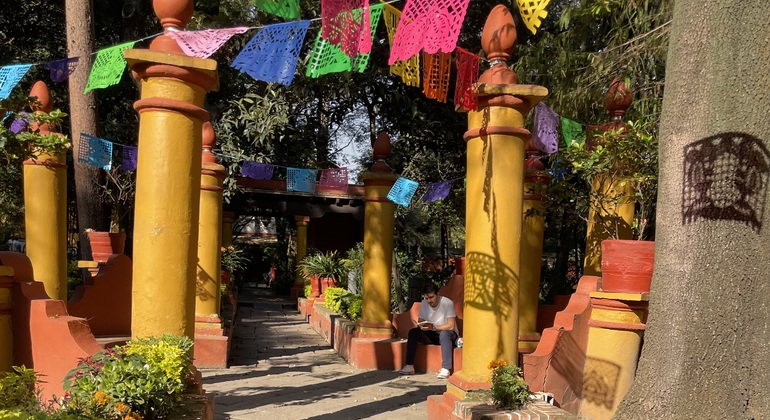
Coyoacán moves at an absolutely different speed. This "place of coyotes" predates the Spanish conquest and still feels like a village trapped inside a megalopolis. Weekend markets and the Frida Kahlo Museum (Casa Azul) draw people who want Mexico City's soul without the overwhelming scale. Meanwhile, Roma & Condesa have tree-lined, European-style streets where early 20th-century mansions have been converted into cafes, bookstores, and galleries. These neighborhoods prove that CDMX isn't just Aztec-plus-colonial. It's also got serious Art Deco, Modernist, and contemporary culture woven through residential streets that actually feel human-scale.
The Water, Park, and Open-Space City
Most visitors don't know that Mexico City was originally built on water. It is an actual island city in the middle of a lake. The Spanish drained most of it, which explains why the ground keeps sinking. Yet, Xochimilco still has those ancient canals the Aztecs engineered. You can rent a trajinera (colorful flat-bottom boats) and float through chinampas that predate Columbus. Except now there's Mariachi music from neighboring boats and guys selling Coronas beer and tacos al pastor from floating kitchens. Yes, it is a different atmosphere than 1521, but still amazing. On the other side of town, there is Chapultepec Park & Castle. Mexico tried having emperors twice, but it didn't work out either time.
Choose the Walking Tour Style That Matches Your Style
- For First-Time Visitors. It is better not to overthink it. So, start a free walking tour in Mexico City with the classic Centro Histórico loop — Zócalo, Cathedral, and Palacio de Bellas Artes. It is advisable to have the itinerary in mind before you start chasing specific interests. We mean that you need context before details make sense.
- For History-First Travelers. If you're the type who reads plaques, go all-in on pre-Hispanic routes. See the Templo Mayor ruins first, then visit the National Museum of Anthropology. The museum feels different after you've actually stood where those artifacts were originally used. Those stone carvings aren't just art. They're somebody's actual religious objects.
- For Neighborhood Lovers. Skip the monument checklist and book Coyoacán or Roma & Condesa walks instead. These slow down, duck into corner cafes, and explain why certain streets feel European while others feel pure Mexico. You're learning about the daily life of locals. By the way, Frida Kahlo's Casa Azul is here, which may also be interesting.
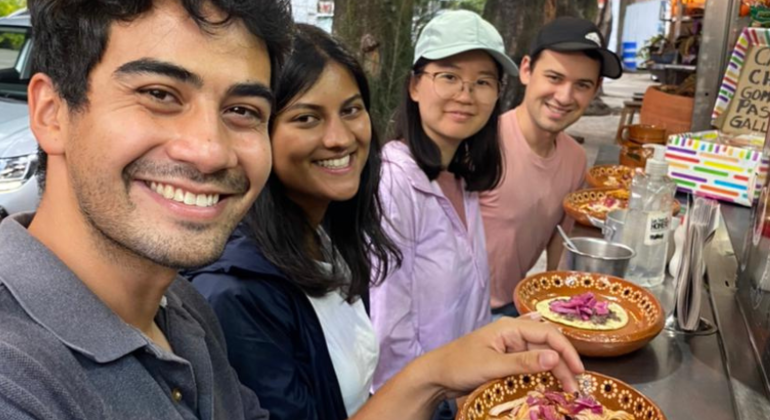
- For Culture Seekers. Explore Mexican Muralism routes, mercado tours through San Juan or La Ciudadela, or street food culture walks. Guides 100% know interesting stories, like which quesadilla stand has been run by the same family since the 1960s.
Why CDMX Works Better as a "Reading Tour" Than a Simple Walk
Mexico City doesn't work like Paris or Rome, where you can just wander around snapping photos. Here, you're walking on Spanish Colonial Architecture (they used to call this the "City of Palaces") that's literally built on top of Aztec temples using stones pulled from those same temples. Then, above that, there are Modernist buildings from the 1950s.
A walking tour is basically hiring a translator for a book written in three languages at once. For example, the Zócalo is simultaneously an Aztec sacred plaza, a Spanish imperial showpiece, and a modern public gathering space. And with a local storyteller guide, every corner reveals something that was deliberately hidden. The whole city is a palimpsest, and each generation writes its story on top of the previous one without completely erasing what came before.
Practical Flow: What to Know Before You Walk
- The model. These run on a tip-based system — pure "pay-what-you-wish" discretionary payment. It means that you don't pay upfront. The tour ends, you decide if you want to pay for it, and if so, hand the guide whatever feels right. But, of course, guides are encouraged when you appreciate their work.
- Transparency. Every tour page shows the full route before you book it. You'll see exactly which sights you will visit, where you will stop, and how long the tour will take.
- Booking advantage. Online reservation means you secure your spot. Just pick your date, click "Book Now," and get confirmation. If plans change, you can cancel it for free.
- Comfort & Altitude. Mexico City is situated at 2,240 meters (over 7,000 feet). And you'll feel it. So, bring a great sunblock (UV is stronger up here), broken-in shoes (remember that you will walk colonial cobblestones), and don't sprint around your first day. Hydrate more than you think you need to. The high altitude sneaks up on people who ignore it.
Beyond the Checklist: North America's Most Vibrant Palimpsest
Mexico City stands alone among world capitals because it refuses to choose between its identities. Walking tours in Mexico City help understand how a place can simultaneously be Aztec, Spanish, Indigenous, revolutionary, modern, and stubbornly itself. You need to walk it, with local storyteller guides who know which stories are buried under which stones, on which corners the murals hide revolutionary messages, and why Paseo de la Reforma still feels distinctly Mexican.

- Free Tours in 140+ countries!
- Trusted ratings & reviews!
- Free booking 100% guaranteed!
- FAQs about free tours in