Best Free Walking Tours in Bogota
Offering you 91 tours in Bogota, Colombia
39,585 Reviews in Bogota
Do I need to make a reservation in advance, or can I just join on the day?
We recommend that you reserve a place on the tour in advance. The thing is that places are limited, and you can’t just join the tour without a reservation.
How much is it customary to tip the guide for a free tour in Bogota?
It is customary for tourists to leave tips depending on their impressions and opportunities. Usually, this amount is from 5 to 15 dollars per person. Such a gesture will be perceived as a sign of gratitude for the guide’s work.
Are there themed tours available, like food culture?
Yes, there are tours dedicated to street art, such as the “Free Graffiti Tour Bogota”, gastronomy, and the history of coffee. Such tours will give you the opportunity to dive deeper into the local culture. They are great for those who want to go beyond the classic format.
What should I wear or bring, considering Bogota’s weather and altitude?
The weather in Bogota is changeable, so you will need to take a light jacket and an umbrella. Given the high altitude, comfortable shoes and water will be especially important. You will need to wear layers of clothing to feel comfortable with the changing temperatures.
Are food or coffee tastings included in the tour?
The standard itineraries do not include tastings. However, you can book a place on the “Free Food Tour of Bogota” where you can try ajiaco, pies, waffles, coffee, and much more. You will also be able to try vegetarian dishes. If you want to try all the dishes at each stop, it will cost you about $9.
Discover the City of Contrasts
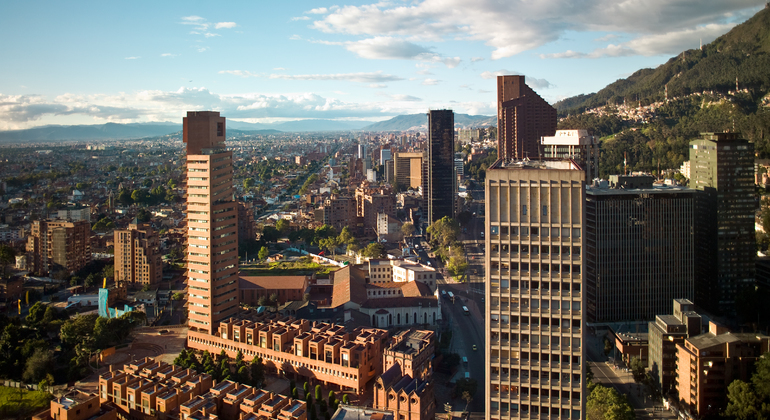
Nobody tells you what Bogota actually feels like. You read about its history, then you land in La Candelaria, and the city already feels three moves ahead of you. That is why a free walking tour in Bogota from FREETOUR.com puts someone beside you who grew up here, someone who points at Plaza de Bolívar (it is where most routes begin) and explains what that square has actually lived through — marketplace, battlefield, protest ground, all in the same square. You will know everything about this beautiful city in just 2 hours and almost for free.
Why Take a Free Walking Tour in Bogota?
The answer is that free tours in Bogota exist because the city is too dense to figure out on your own. Of course, you can read the Wikipedia article. You can look at the map until something becomes understandable. You'll still end up spending your first afternoon wandering into the wrong end with no clear sense of which neighborhood you're in or how you got there.
- Context over sightseeing. This isn't a city where looking at something is enough. Bogota's transformation over the last twenty years needs explaining. The visible stuff is the surface. And what happened underneath is the story.
- Neighborhood clusters. Almost everything worth seeing is inside or just off the historic colonial core. That makes the walking really efficient, which is not something you can say about capitals this size very often.
- Themed routes. The classic history tour is just one option. But there are also graffiti tours, coffee tours, or food tours — each one a completely different read in the same place. Some people do three routes in a week and still feel like they missed something.
- Book ahead. Groups are kept small deliberately, and that's what makes them work. They are small enough that you can ask questions without holding up twenty people behind you. It should be noted that FREETOUR.com takes reservations in advance.
Bogota in Four Routes: How the Capital Unfolds
Unfortunately, you can't cover this city in one go. Bogota is enormous and it doesn't have one personality…it has about six, depending on the neighborhood. And each free tour in Bogota focuses on one of four distinct layers, and each one shows you something the others don't.
Route 1 — Historic and Political Bogota
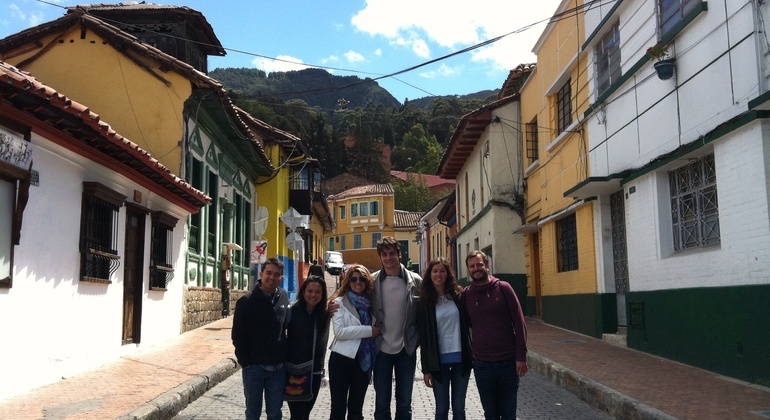
The colonial core is where the city started and where it still carries the most visible weight of its own history. The Catedral Primada anchors one side of the main square. Civic buildings press in from three directions. The cobblestones fan out from there into streets that don't follow any obvious logic, as they were laid down long before city planning was a concept, and they show it. This is the route of free walking tours in Bogota that answers the question of how Bogota became what it is, which turns out to be a longer and stranger story than most visitors are expecting.
Route 2 — Art, Museums, and Pre-Hispanic Identity
The Museo del Oro can be called one of the more remarkable museums in the world. The gold collection is massive and almost completely opaque without the cultural context behind it. A guide who understands Muisca Heritage (the indigenous civilization responsible for most of what's in those cases) changes the entire visit. The Botero Museum is nearby. It is always free with no tour ticket required. Fernando Botero's rounded, oversized figures fill room after room in a building that gives no indication from the outside of what's waiting inside.
Route 3 — Graffiti, Urban Expression, and Modernity
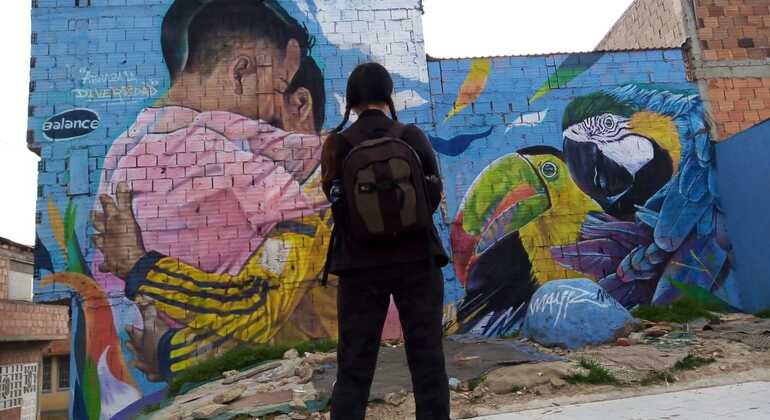
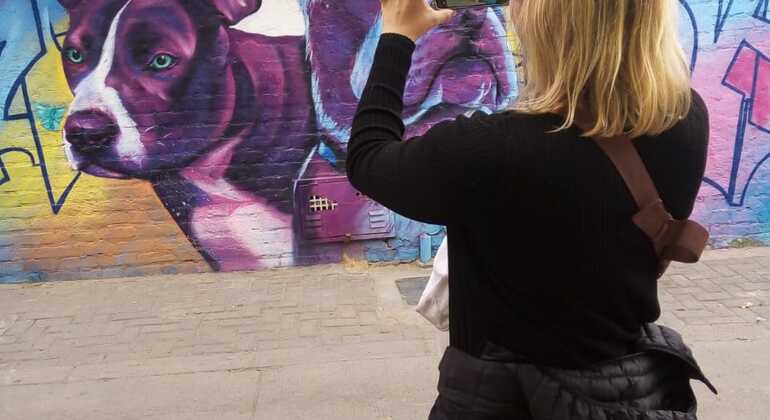
Decriminalized Street Art was a policy decision, and it turned into one of the most consequential things Bogota ever did for its own identity. Once the city stopped prosecuting murals as vandalism, artists arrived. The Distrito Grafiti (the corridor along 26th Street and the blocks around San Felipe) is now one of the most documented urban art zones on the planet. And these aren't decorations. They're responses to specific political moments, the so-called pieces of community memory that a lot of tourists walk past without realizing what they're looking at.
Route 4 — Panoramic Bogota and Monserrate
Monserrate Hill is where Bogota finally makes sense at scale. This sanctuary at 3,152 meters has served as a pilgrimage destination for centuries. What it gives you in practical terms, right now, is the only vantage point that lets you understand just how large the city actually is. The Andes Mountains press in from the east. The savannah rolls out in every other direction. On a clear morning, the whole thing looks like something that shouldn't be situated this high above sea level, and yet, here it is.
Choose the Walking Tour Style That Matches Your Trip
- First-time visitors should start with the colonial center. It is better to get the political geography sorted first, and everything else layers on top of that.
- Culture-first travelers will want the museum route. Pre-Hispanic gold and Colombia's most recognized painter in a single afternoon is a hard combination to improve on.
- Urban explorers who came specifically for street art can take a graffiti tour. It is like another world. Don't talk yourself out of it because you think you need to be an art person first. You don't.
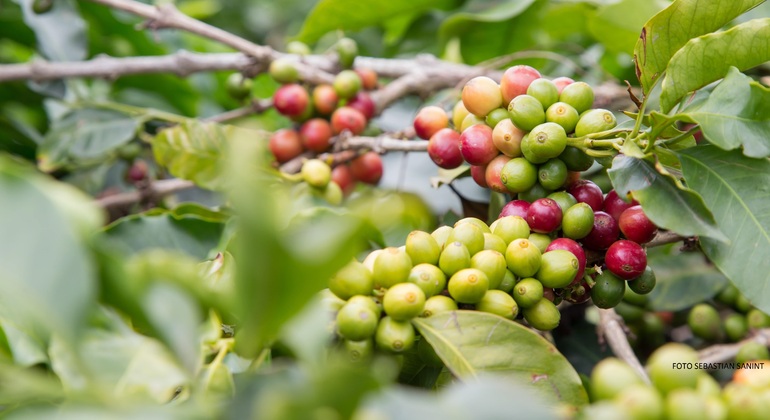
- Food & coffee lovers will like a dedicated food tour running on a separate tasting fee of around $9 USD. You can try ajiaco Santafereño, fresh empanadas straight from the fryer, and a few other things you'll spend the rest of the trip trying to track down again. Moreover, Colombian Coffee Culture runs through the whole city, and most food routes include a specialty café stop that makes the farm-to-cup story actually land.
Why the High-Altitude Capital Is Better Understood Through Neighborhood Energy
Bogota doesn't have one thing it's famous for. That's actually what makes it interesting. Yet, it holds status as a UNESCO City of Music. It also functions as the world's Emerald Capital. Historians used to call it the "Athens of South America" partly as a compliment for its universities and its literary tradition, partly because the city takes itself so seriously. All of this is real. And walking tours in Bogota work because they turn a complicated and frequently contradictory capital into something that can actually be understood by someone who has just arrived.
Practical Reality — What Visitors Should Know
- Tipping etiquette. The pay-what-you-wish model of walking trips means the guide's income depends directly on how much you like a tour. The suggested range is $5 to $15 USD. If it was good, and more often than not it will be, tip toward the top of that. It makes real sense.
- Weather. Bogota is known for cycling through sun, cold, wind, and rain inside a single afternoon. Locals call it "four seasons in one day," which sounds like a cliché until a clear morning turns into a sideways rainstorm at 1pm and you're stuck outside without a jacket because it was warm when you left. Be ready for that.
- Altitude. The city is at 2,640 meters above sea level. Your lungs will feel it. So, drink water consistently, wear shoes you can actually walk in for three hours, and don't book a long route as your very first activity after landing. Give your body a morning to figure out what's happening.
Bogota Beyond the Checklist: South America's Dynamic Heart
Bogota doesn't open up to people moving fast through it. Chorro de Quevedo (the small square where the city supposedly started) is situated minutes from murals painted last month. That gap between old and new is everywhere here, and mostly unexplained. Hot chocolate with cheese shows up at breakfast. Chicha gets poured at certain corners if you know which ones. Muisca Heritage and last week's political argument share the same wall sometimes, literally. And walking tours in Bogota exist because none of this context announces itself. You need someone to hand you the thread first.
- Free Tours in 140+ countries!
- Trusted ratings & reviews!
- Free booking 100% guaranteed!
- FAQs about free tours in