Best Free Walking Tours in Washington DC
37 tours in Washington DC, USA, in English and other languages





138 Reviews in Washington DC
Are free walking tours in Washington, D.C. really free?
They run on a tip-based model. Registration costs nothing, and at the end you tip your guide (if you want) based on your budget and how the tour went.
Do I need to book my tour in advance?
Yes. Booking ahead is smart given how busy the city gets, especially during cherry blossom season and school trip months. It also locks in your exact meeting point.
What can I expect to see on a standard D.C. walking tour?
Routes vary, but most cover the National Mall, the Lincoln Memorial, the Washington Monument, the White House area, or Capitol Hill, with a focus on presidential history and civic architecture.
Is Washington, D.C. a good city for walking?
Absolutely, the core is flat and walkable with wide sidewalks. That said, distances between monuments are longer than they look, so comfortable shoes matter.
Do walking tours include entry into the Smithsonian museums?
No. These tours cover outdoor storytelling and city context. Most public museums in D.C. are free to enter on your own afterward, though select locations (and private museums) require advance timed-entry passes or paid tickets.
Where do guided walks in the capital usually start?
Most begin near major Metro stops or landmarks — the Smithsonian Metro stop, Lafayette Square, Capitol Hill, or Union Station. Check your voucher for exact details.
Are the monumental city tours suitable for families with children?
Absolutely. The National Mall and surrounding sidewalks are wide, flat, and stroller-friendly. Just check the total distance and duration against your kids' stamina beforehand.
What is the difference between a free walking tour and a bus tour in D.C.?
A walking tour gives you slower, closer storytelling around specific monument clusters. A bus tour covers more ground, which helps for farther sites like Arlington Cemetery.
Understand the Capital Through Monuments and Civic Stories
The history of this capital of America is built into the streets, sidewalks, domes, museums, and plazas you will walk through during any free tour in Washington, DC. The National Mall connects everything — a large green area that runs from one side (government) to the other (memorials). During your stroll, you will pass by the Smithsonian Institution and have a firsthand view of the U.S. Capitol building. Your guide will tell you the civic history that no websites know. In a word, it can be called a quick education on how America functions.
Why Start with a Guided Walk in the District?
This city seems small on a map but huge when walking. The locals call the mall "a mile that feels like five," and honestly, they are not exaggerating by much. But a local guide can transform a random walk into a story about presidential history, the gradual unfolding of democracy in America, and many more things. That is one reason why a free walking tour in Washington, DC is a good idea.
What you really get from a guided walk instead of just wandering around by yourself:
- An “imaginary map” of the city for easy orientation
- History of buildings that just look like “another marble building”
- A heads-up on where security lines will eat up your time
- Local advice on which sights are worth spending an hour and which are only worth five minutes
- A guide who will actually answer most of your questions
What You Can Discover on D.C. Walking Tours
The majority of walking tours in Washington, DC are organized into several main geographic areas. Once you have an understanding of these basic zones, the remainder of your visit will be relatively easy to organize.
National Mall, Memorials and Presidential Landmarks
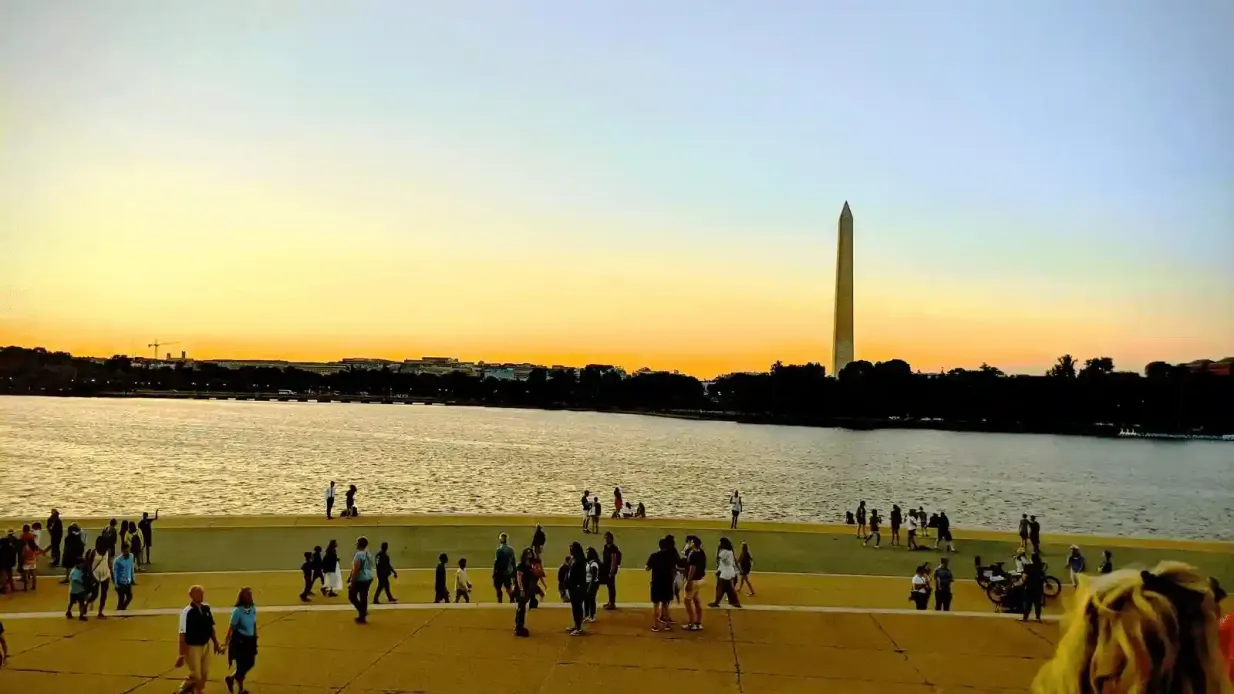
This is the "postcard" area of DC. The Lincoln Memorial is located at the western end of the National Mall, with the World War II Memorial sitting nearby between it and the Washington Monument in the center, while the U.S. Capitol stands at the eastern end. Adjacent to the Lincoln Memorial lies the Vietnam Veterans Memorial, which is a large, black granite wall with the name of each of the approximately 58,000 service members who were killed or missing during that conflict. Most guides also stop to view the White House from the outside because visitors can’t enter without special permission beforehand.
Smithsonian Museums and Cultural Institutions
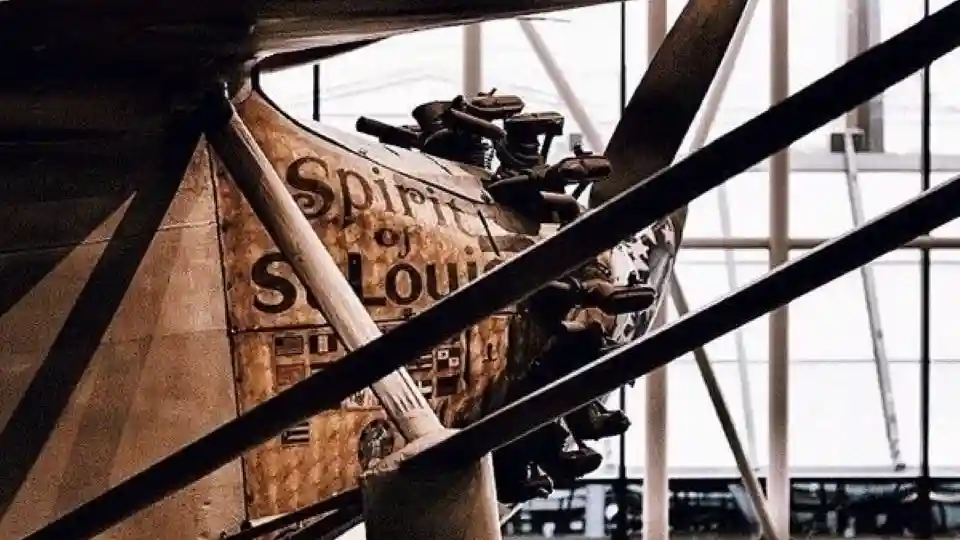
The Smithsonian has over 20 cultural museums and galleries, and nearly all of them cost nothing. While free walking tours in Washington, DC will provide an outside perspective on the buildings that make up the museum complex, they can give you a sense of scale, proximity, etc. What is more, major attractions like the National Museum of American History, the National Air and Space Museum, and the nearby National Gallery of Art (which is independent of the Smithsonian but also free) are all grouped along the Mall. Thus, this walk can save you hours navigating around the area.
Capitol Hill and Government Architecture
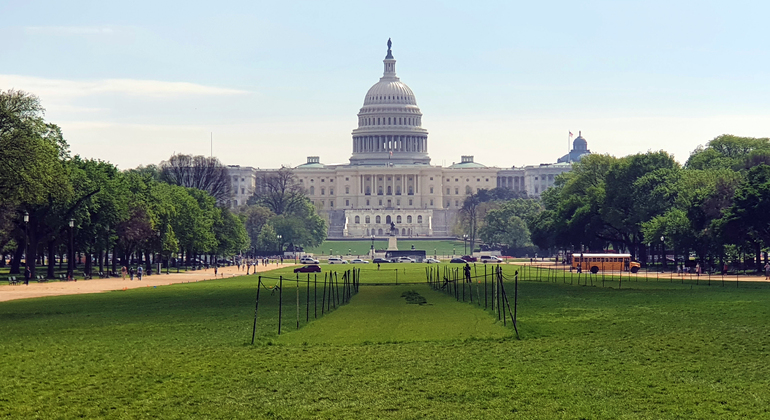
The United States Capitol Building, home of the House of Representatives and Senate, stands near the Library of Congress and the U.S. Supreme Court building — all located within blocks of one another. The buildings along this corridor tell their story via large columns, large domed ceilings and stonework that evokes a sense of permanence.
Georgetown, Dupont Circle and Neighborhood Life
Tours then move away from all political things. The formal marble of the Mall gives way to Georgetown's cobblestone streets, historic row houses along the C&O Canal, and a waterfront that feels like a classic East Coast town. Dupont Circle is more residential in its feel, and the U Street Corridor has a very real connection to jazz history — Duke Ellington's first performances were held there.
Free Walks, Museum Visits & Local Experiences
Free tours in Washington, DC will help you get familiar with the overall landscape and provide information about where some great photo views are.
However, many additional experiences are well worth paying for, including Hop-on Hop-off tours, which can be far superior in helping you understand how everything really fits together. Plus, taking sightseeing cruises like the Potomac River cruise will give you a completely new view of the monuments and landmarks. The day trip to Mount Vernon is also very much worth the drive.
And no matter which museum you have added to your itinerary, remember that while many major public museums are free and walk-in, several popular spots and private attractions require advance timed-entry tickets.
Choose Your Experience by Travel Style
For First-Time Visitors
Take a walking tour in Washington, DC in the area where you can learn everything about the Mall (a great way to get an overview) or spend time visiting at least one Smithsonian museum instead of taking the all-day version that includes three museums.
For History Buffs & Political Travelers
If you are interested in civil rights, presidential history, and the National Archives, then the Capitol Hill area and nearby Penn Quarter are the best places for you. These tours are often much longer than orientation tours, but they include a lot of historical sites.
For Museum Lovers & Art Seekers
Classic collections are available in the National Gallery of Art and the Portrait Gallery. If you are looking for an experience that is a little different, try interactive museums, for example, the International Spy Museum.
For Families & Educational Travelers
Since many monuments have flat terrain and are easy to navigate using a stroller, kid-friendly monument routes can be a good option. Consider combining this with visits to the National Zoo, as well as audio guides or city games that allow children to learn at their own pace.
For Foodies & Nightlife Seekers
There are food tour options at Eastern Market or Union Market. Try some food stops in Adams Morgan. When night falls, Dupont Circle and Shaw are where people go to hang out and party.
Best Areas and Meeting Points in the Capital
Your tour will likely begin near the Smithsonian Metro stop, at Lafayette Square, Union Station, or somewhere nearby on Capitol Hill. All are within walking distance of the National Mall. Public transit throughout the city is operated byWMATA (Washington Metropolitan Area Transit Authority), also known as the DC Metro, and many metro stops have multiple exits. Therefore, please read your confirmation e-mail for directions before arriving to ensure you get out at the correct location.
How to Combine Your Walk with Museums and Cruises
- The morning is ideal for walking as the sun will be at its lowest point of intensity, and there are fewer people around.
- The afternoons can be spent visiting indoor locations such as museums (remember about timed-entry passes).
- The evenings can be reserved for taking a Potomac River cruise that leaves from the Georgetown waterfront.
By the way, when you arrive at one of Washington D.C.’s airports, consider booking airport transfers and luggage storage services.
When to Book Your Free Washington D.C. Tour
The city attracts an estimated 1.5 million people during the cherry blossom season (typically late March to early April), so tour spots are limited quickly. It also gets crowded during the fall months due to school trips. Tours from FREETOUR.com operate on a tip-based model. In summer, it is highly recommended to plan your tour time early in the morning because much of the city was built on reclaimed marshland. By midday, the intense summer humidity is quite oppressive.
Practical Tips for Your District Visit
- The distances around the National Mall can be deceptively long, so take comfortable shoes.
- Security screening will occur when visiting government buildings and many museums.
- Take a refillable water bottle and sunblock protection because there is very little shade on the memorial plaza areas.
- Check ahead to see if your chosen museum requires advance timed-entry tickets (whether free or paid).
More Things to Do After Your Tour
There is plenty to do after completing your tour. For example, bus tours make it possible to visit many places while conserving your energy. Cruises & boat tours provide you with views of the water, and observation decks allow you to look down on all that the capital has to offer. Many shows & theatres, such as Ford's Theatre, are worthy of viewing. Also, consider bike rentals to explore some other areas or day trips to Mount Vernon or Old Town Alexandria for something different.

- Free Tours in 140+ countries!
- Trusted ratings & reviews!
- Free booking 100% guaranteed!
- FAQs about free tours in