Best Free Walking Tours in Rome
Offering you 110 tours in Rome, Italy



66,400 Reviews in Rome
What is the recommended tip for the tour guide?
The number of tips you leave to the guide depends on the impressions you get and your financial means.
Are the guides professional and knowledgeable about the city's history and culture?
Certainly. Each of our guides knows very well the history of the country and the city in particular. At the same time, as local residents, they can tell you about the highlights of the city that you cannot find out about anywhere else.
Can I book the free tour in languages other than English?
Each tour we provide assumes the availability of a choice of language in which it is conducted. For example, you can book the Rome free tour in Spanish, Italian or French. In any case, you will listen to the tour in a language you understand.
Is there an option to book a tour that includes a gelato tasting or a visit to the Jewish Ghetto?
Yes. On FREETOUR.com you can book for example From Jewish Ghetto to Trastevere - Rome’s Hidden Gems by Walkative tour in which you will learn more about the Roman ghetto and also visit interesting historical points.
How do I know if I’m getting the right level of service and expertise from the guide?
Everything is based on your personal feelings. If you are sure that the guide did a poor job, you can always send us feedback and we will sort this issue out. At the same time, we are sure that we select guides carefully and cooperate only with professionals.
Which tours are the most popular in Rome?
Among Rome’s free walking tours, “Historical Highlights of Rome Free Tour” and “Highlights Of Trastevere And Jewish Ghetto Rome Free Tour” are especially popular for their engaging storytelling and coverage of both iconic landmarks and vibrant neighborhoods.
Which tours should beginners choose?
Beginners should consider “The Eternal City of Rome Free Tour” for a broad introductory overview of the city and “Historical Highlights of Rome Free Tour” for foundational context on Rome’s layered past.
Rome Free Tours at a Glance
Few cities on earth pack this much history into streets you can actually walk. A free walking tour in Rome gets you from ancient ruins of the Colosseum area to Renaissance piazzas to tucked-away alleys most visitors never find.
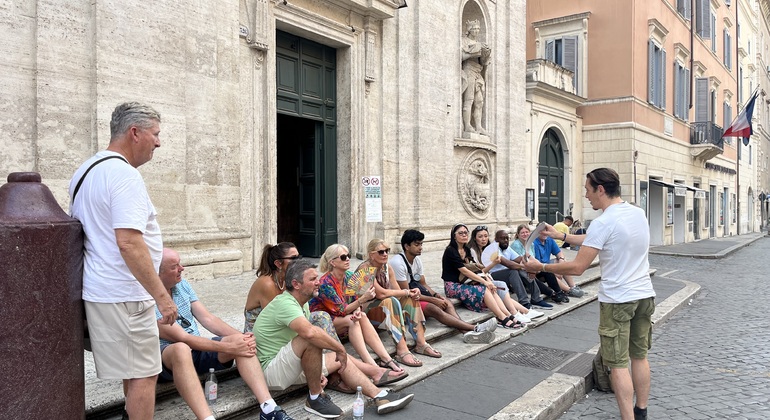
But you can book your spot online through FREETOUR.com and explore the city with a small group and an English-speaking local guide in about 2 hours. At the end, you tip whatever you think the experience was worth.
Discover the Best Free Walking Tours in Rome
Rome is the rare kind of city that works like an open-air museum. Walking through it without context can leave you staring at a crumbling wall, wondering what you're actually looking at. That's exactly where free walking tours in Rome make all the difference.
The city looks small on a map. It isn't. Walk five minutes in any direction from the center and you're stepping over Ancient Roman foundations, past a medieval church that was built on top of a pagan temple, all of it decorated during the Renaissance and then made even more dramatic during the Baroque.
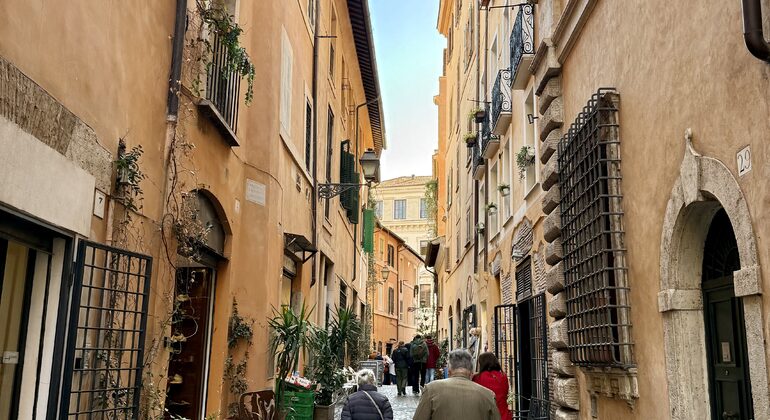
There's also a purely practical reason why walking tours in Rome work so well. You simply can't reach the best parts any other way. The streets in the historic center are too narrow for buses and too winding for a logical self-guided route. The places that actually give you goosebumps are down those streets, not on the main road.
Why Rome Was Made for Exploring on Foot
A City Where Ancient Ruins Meet Modern Life
Romans don't romanticize their history; they just live next to it. Walk down any street in the center, and you'll see SPQRstamped on an iron drain cover, an old church, and a bar where everyone will give you a look if you order a cappuccino after 11 AM. It's just how the city works. That's exactly what makes it so disorienting at first, and exactly why having a local expert guide with you changes everything.
Historic Landmarks Close Together
Spanish Steps to the Pantheon is about a 15-minute walk. The Trevi Fountain is maybe 10 minutes beyond that. The Colosseum, the Roman Forum, and Piazza Venezia with the Vittoriano are all in the same valley, almost on top of each other. Taking a walking tour in Rome, you can cover an enormous amount of ground in a single morning.
A City Shaped by the Roman Empire and the Church
This city got built twice, essentially. First by the emperors (temples, arenas, triumphal arches). Then, by the Popes, who spent centuries putting their own stamp on everything, commissioning Bernini and Borromini. The tension between those two forces (political empire and religious authority, Caesar and Pope) is still written all over the city. And once you see it, you can't unsee it.
Popular Routes and Areas Covered
Colosseum and Ancient Rome
This is the one most people have in their heads before they even land. The route usually kicks off near Piazza Venezia, moves through the Imperial Forums, and goes down into the Roman Forum before you get your first proper look at the Colosseum.
Before you go, one thing to know is that free tours in Rome take in the history and the exterior, not the inside. No entry tickets. Those you'd need to sort separately, and the queues are no joke.
Historic Center and Famous Squares
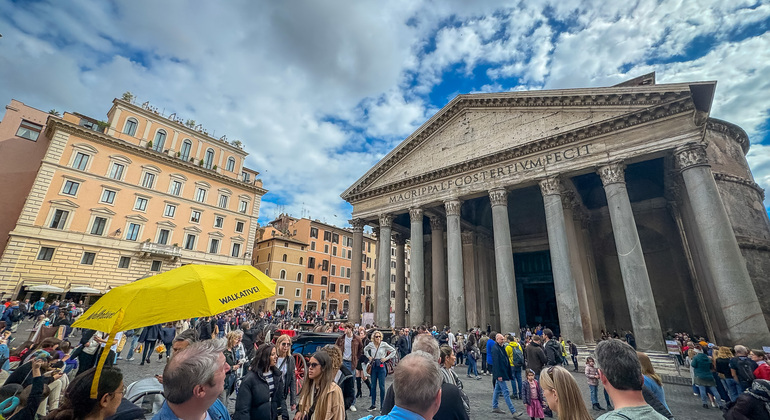
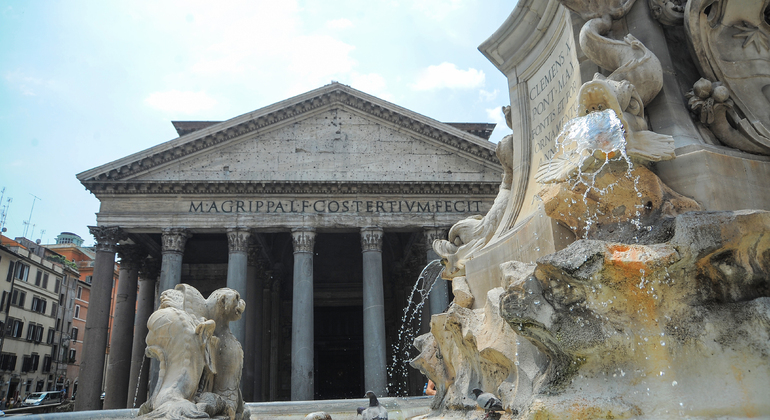
This is the route that makes people go quiet mid-walk. You're threading through the streets of Baroque Rome, like the Pantheon, Piazza Navona with Bernini's Fountain of the Four Rivers, Campo de' Fiori, and eventually the Trevi Fountain, where you will absolutely toss a coin. The Spanish Steps sometimes make it in, depending on the specific tour.
Vatican and Papal Rome
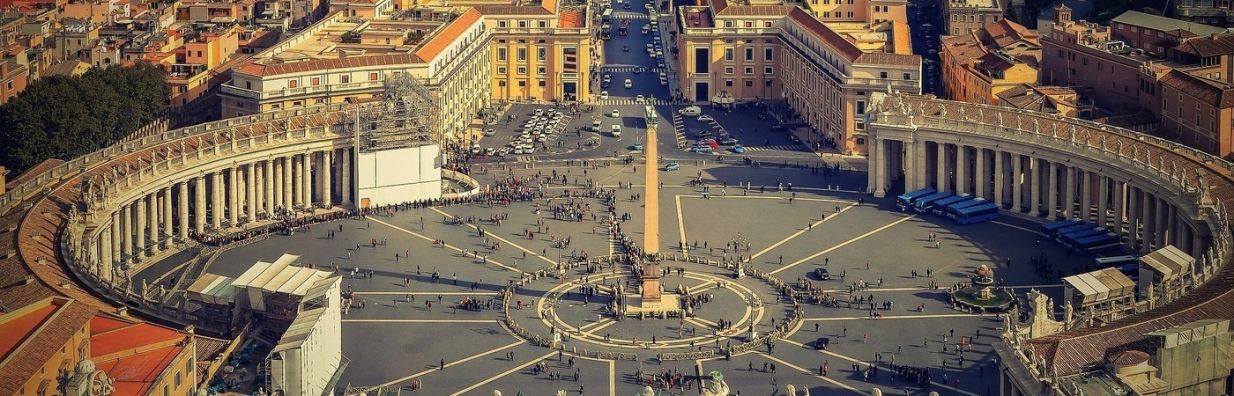
This route crosses the Tiber River toward St. Peter's Square and takes in the scale of St. Peter's Basilica from outside. Castel Sant'Angelo, built originally as the Mausoleum of Hadrian, is usually included as well.
Just to set expectations correctly, this tour explores the Vatican area and the grand approach to it, but doesn’t include tickets to the Vatican Museums or the Sistine Chapel.
Trastevere and Jewish Ghetto
Trastevere is the old medieval district across the Tiber. It is bohemian and a little rough around the edges. The Jewish Ghetto next door carries one of the oldest and most layered histories, with the Synagogue, the Turtle Fountain, and Tiber Island.
Cultural Experiences Beyond Sightseeing
Gelato & Espresso. Remember that real artisanal gelato is kept in flat metal containers with lids, and its colors are muted. The same rule applies to espresso. Drink it standing at the bar, the way locals do, for less than two euros. Avoid the tourist traps.
Water & Nasoni. The city has over 2,500 free drinking fountains called Nasoni. Bring a refillable bottle when you are on a free tour in Rome, especially between June and August when the heat is cruel.
La Dolce Vita & the Passeggiata. Once the sun starts going down, Romans don't rush home. They do the passeggiata. It is a slow evening stroll through the neighborhood. Just movement for the sake of it, maybe an aperitivo somewhere along the way.
Types of Tours Available
Ancient Rome Tours
Focused on ruins, gladiators, the founding legend of Romulus and Remus, and the rise and fall of the Roman Empire.
Religious & Vatican Tours
Centered on the Pope, the major basilicas, and the Church's grip on Roman architecture and politics.
Food & Gelato Tours
Structured around tasting - espresso, supplì, carbonara, pizza al taglio, suppli, and the aperitivo hour.
Evening & Ghost Tours
The capital of Italy after dark is a completely different city. Guides know where the legends live.
Guided Experiences vs. Wandering Alone
Agree that without someone to tell you what you're looking at, the Roman Forum is just a field of broken columns. But standing in that same spot, knowing it's where Julius Caesar's body was burned, is a completely different experience. That's the difference a guide makes.
There's also the practical stuff. Rome's streets follow two thousand years of whoever built whatever they needed wherever they felt like it. A guide will navigate the winding streets and even take you to one of the six Talking Statues scattered around the city. These are ancient statues that Romans have been using for centuries to post anonymous notes. Most visitors walk past them without having any idea.
Is a Guided Walk Worth Your Time?
Yes, a free tour is the best introduction to the city you can get.
Why Choose the Free Option
- Budget-friendly. You can save your money for food and actual museum tickets.
- Social atmosphere. You'll meet other travelers and end up exploring together afterward.
- Flexible overview. Great for instant confirmation booking.
When to Choose a Paid Private Tour
- Skip-the-line access is essential if you want to enter the Colosseum or the Vatican Museums.
- Deep historical dives on specific periods or themes.
- Families traveling with seniors as Rome's Sanpietrini cobblestones are genuinely tiring over hours.
How the Booking Process Works
- Browse available tours on FREETOUR.com and pick your route
- Book online, as it is mandatory, since city regulations limit group sizes strictly
- Show up at the meeting point and look for the guide's flag or umbrella
- Pay what you wish based on what the experience was worth to you
Practical Tips Before You Go
- Shoes. The Sanpietrini are beautiful and merciless. Heels are dangerous on them. Wear sneakers or flat-soled shoes.
- Water. Pack a refillable bottle and use the Nasoni freely throughout the walk.
- Dress Code. Shoulders and knees must be covered to enter churches, including the Pantheon and anything in the Vatican City area.
- Sun. This capital in summer is brutal. Sunscreen and a hat are a must.
When is the Best Time to Explore?
Spring (particularly April and May) and autumn (September - October) are perfect. Summer, especially August, is best avoided if you can because it's genuinely hot and the city is split between overrun tourist zones. Winter is cold, occasionally rainy, but nothing extreme.
Sunset and evening tours are worth seeking out year-round, as the city under golden hour light is something else entirely.
Ready to Discover Rome?
A walking tour gives you the foundation that makes every other hour you spend in the city richer. Book through FREETOUR.com, spend your perfect time there, and tip your guide well if they earn it.
A tour in Rome is the right move if you:
- Visit the capital of Italy for the first time
- Travel solo and want a company
- Need a fast, reliable orientation to the city
- Travel on a budget and want to spend your money on the things that actually cost something

- Free Tours in 140+ countries!
- Trusted ratings & reviews!
- Free booking 100% guaranteed!
- FAQs about free tours in