
Best Free Walking Tours in Tbilisi
42 tours in Tbilisi, Georgia, in English and other languages
4,399 Reviews in Tbilisi
Does the tour include stops at hidden courtyards or traditional wooden balconies?
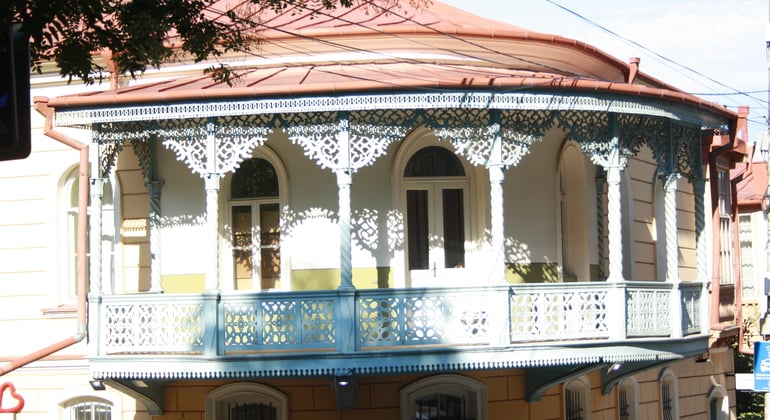
Yes, the tour goes through the cozy courtyards of the Old Town and the famous Tbilisi wooden balconies decorated with carvings. These places allow you to feel the spirit of old Tbilisi. The guide will also tell you about their architectural features and history.
Are there tips for exploring Tbilisi’s vibrant nightlife or bathhouse culture?
At the end of the tour, the guide will recommend popular bars, jazz clubs, and sulfur baths in the Abanotubani area. You will learn where it is better to relax in the evening and what traditions are associated with baths. These tips are especially valuable if you plan to stay in the city for several days.
Does the tour include a visit to the leaning clock tower of the Rezo Gabriadze Marionette Theater?
Yes, the Rezo Gabriadze Tower is included in the route, and you will learn the history of its creation. The guide will tell you about the significance of this tower and the theater in the cultural life of the city. If possible, you can see a mini-performance, if the time matches.
Will we learn about the city’s street art and contemporary creative scene?
We don't have a tour on this topic. However, you can always ask the guide about the city's street art.
Will the guide point out the best places to try khachapuri and Georgian wine?
During the tour, you will get recommendations on where to try real khachapuri and taste wine. Guides recommend proven authentic places where locals eat. This is especially useful if you are in Tbilisi for the first time.
Discover the City From Sulfur Baths to Hilltop Views
Tbilisi takes you by surprise. For instance, one street in Old Tbilisi (Dzveli Tbilisi) has a slight sulfur odor from the ancient baths, while a short walk further down reveals a leaning clock tower, where a small wooden angel comes out on top to ring the bell. The best way to explore the area is to join a free walking tour in Tbilisi. From the brick baths of Abanotubani to the ancient walls of Narikala Fortress, a tour connects Tbilisi’s Silk Road heritage with its vibrant present.
Why Take a Walking Tour in Tbilisi?
The idea behind free tours in Tbilisi is based on this same logic:
- Dense heritage. Bath houses, old churches, and many of the buildings with their unique balcony designs are all located within the historic section of downtown Tbilisi, which can be seen in a matter of hours.
- Atmospheric navigation. Walking tours give you a better understanding of what makes the city feel so old, somewhat dramatic, and so modern at the same time.
- Thermal history. The city started around the hot springs of Abanotubani (that’s where the original public baths were).
- Creative landmarks. You see the fun parts too, for example, the leaning clock tower at the Gabriadze Theater, with its little "Circle of Life" show.
- Culinary & nightlife tips. You will get pointed to good food and bars, like where to find real khachapuri or wine that isn't priced for tourists.
Read Tbilisi Through Five Urban Thresholds
Warm Tbilisi: Abanotubani and the Sulfur-Bath Origin Story
Legend says that everything in Tbilisi started as a result of a hunt for a falcon. While King Vakhtang Gorgasali was hunting, his falcon plunged into a hot spring. When he retrieved it, it was cooked. And that, more or less, is how someone realized the ground here was warm. So, we have the sulfur springs legend, and the name "Tbilisi" translates into English as a "warm place".
Locals still come to these steaming domed bath houses, Abanotubani, daily. Soaking in the warm sulfur waters and unwinding inside these historic domed rooms is a cherished part of local bathhouse culture.
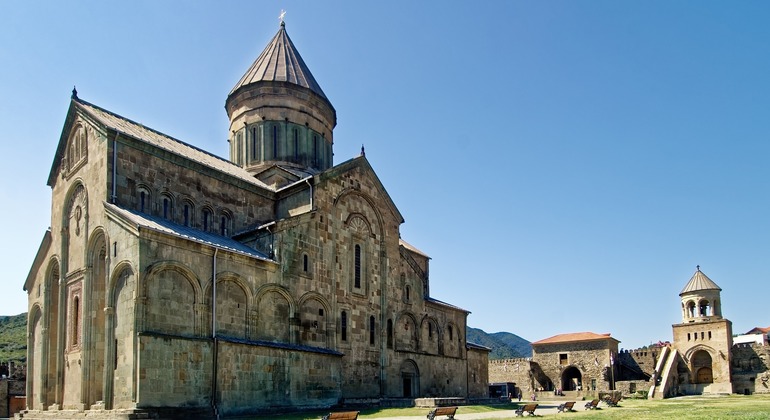
Further down in Old Tbilisi stands Anchiskhati Basilica, a small stone church. It is the oldest and most historic one in all of Tbilisi.
Wooden Tbilisi: Courtyards, Carved Balconies, and Lived History
The carved wooden balconies hang over narrow alleys, every single balcony different and worn down through years of weather.
Through some open gateways, you may find yourself in one of the old "Italian" courtyards. They were public spaces that allowed the inhabitants of these alleyways to dry their clothing, watch children, and generally look after each other. Once you have been welcomed into someone’s courtyard for nothing at all (a true example of Georgian hospitality), you understand why it shows up in every guidebook about this place.
Further along the hillside lies the Sololaki district. In this district, the wooden balconies are replaced by Art Nouveau buildings with carved stone door entrances. These buildings were once the homes of Tbilisi's merchants.
High Tbilisi: Narikala, Metekhi, and the City from Above
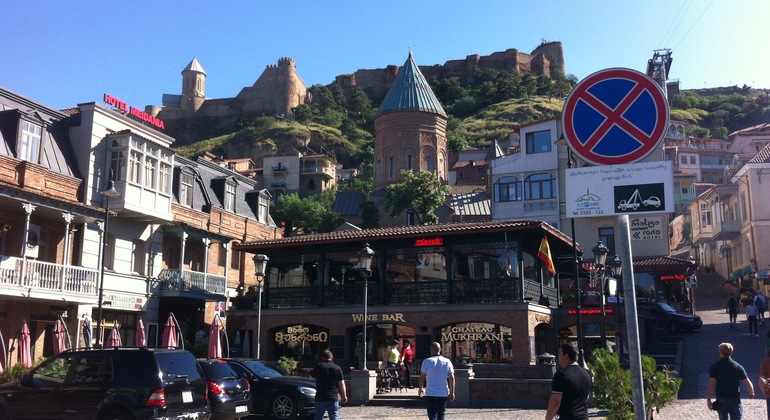
The view of the city from Narikala fortress, dating back to the 4th century, includes the river dividing the city in two, numerous hills in each direction, and thousands of red-tiled rooftops. Across the river sits the Metekhi church and statue of King Vakhtang Gorgasali.
Overlooking the city is Mtatsminda, a peak whose name translates directly to “Holy Mountain”. Locals reach the top via a historic funicular instead of walking. Most guides on free walking tours in Tbilisi refer to the climb to the top of the fortress as their favorite part of the walk.
Storybook Tbilisi: Gabriadze and the Theatrical Spirit
The Rezo Gabriadze Marionette Theater is almost impossible to miss. It has a leaning clock tower, and every hour a tiny mechanical angel pops out from the roof and rings a bell. Twice daily (at 12:00 and 19:00), there are leaning clock tower performances featuring mechanical characters acting out their own version of birth, death, and all that lies in-between, without speaking a single word. This sounds like a whimsical tourist attraction to be built around, but it is representative of Tbilisi itself — an ancient, serious city beneath, with a playful twist on top.
Contrasting Tbilisi: The Bridge of Peace and Modern Accents
The next stop is the Bridge of Peace, a curved bridge made of glass and metal, with an appearance as if it were transported from another time. At night, the lighting enhances its visibility relative to the historic section of the city in the background. As you cross the bridge, on one side are old brick passageways and on the other side are all-glass buildings. It is impossible to miss that the Mtkvari (Kura) River splits the old part of the city from the newer part of the city.
Choose Your Tbilisi Story: Custom Walking Narratives
Each person has their own experience when it comes to visiting new cities. The different walking tours available today have taken into account these different desires:
- For first-time visitors. It is for those who want the basics — bathhouses, fortresses, great views, etc.
- For art & culture enthusiasts. A tour may include the Gabriadze tower, mansions from another era in Sololaki, and other small hidden gems that are often overlooked.
- For food & wine seekers. These walking tours in Tbilisi usually lead you straight to authentic khachapuri spots and cozy, hidden wine cellars.
- For evening explorers. You can explore the city after dark when the lights come on, and the bars begin to fill.
Why Tbilisi Works Better as an Atmosphere Tour Than a Monument Tour
The enjoyable parts of visiting Tbilisi occur while moving between areas, for example, moving from steam from a bathhouse to a windy top-of-a-hill, or from a peaceful inner courtyard to a bridge which will be illuminated at night. A walking tour in Tbilisi connects these locations into a single mood. This is why many atmosphere-focused itineraries have a greater long-term impact on visitors, compared to those who follow a standard sightseeing itinerary.
Bathhouse Culture: More Than a Spa, It Is an Identity
A good tour guide can give you all the information you need, like when is best to visit, what to expect, and how everyone really makes use of the space, to help you understand the culture behind these bathing experiences instead of just glancing through the doorway as if you were a typical tourist. This is one of the best chances at gaining insight into this area without reading a history book.
Practical Rhythm: Managing Cobblestones and Hills
A couple of genuine suggestions as you prepare to head into this part of town:
- Footwear. Your footwear should be sturdy. The roads and sidewalks in Old Tbilisi can be quite uneven with significant inclines.
- Time. You will likely have 2 to 3 hours on each tour depending upon how much you want to see.
- Booking. When looking over the tour information cards, check for the language flag badges for the languages you speak (English, Spanish, German, and French).
Why Tbilisi Stands as the Silk Road's Most Atmospheric Crossroads
Tbilisi has it all — an air of age, drama, and modernity. From its ancient bathhouse domes, Georgian wine-making history dating back nearly 8000 years, and streets such as Shardeni Street where one finds numerous jazz clubs & nightlife, this is a city meant to be wandered about.
The tours are available through the FREETOUR.com online booking marketplace. And since any free tour in Tbilisi operates on a gratuity-based model, you simply pay whatever amount you feel your experience was worth.
- Free Tours in 140+ countries!
- Trusted ratings & reviews!
- Free booking 100% guaranteed!
- FAQs about free tours in