Best Free Walking Tours in Cordoba
79 tours in Cordoba, Spain, in English and other languages









36,047 Reviews in Cordoba
Are Córdoba’s famous landmarks, like the Mezquita, included in free tours?
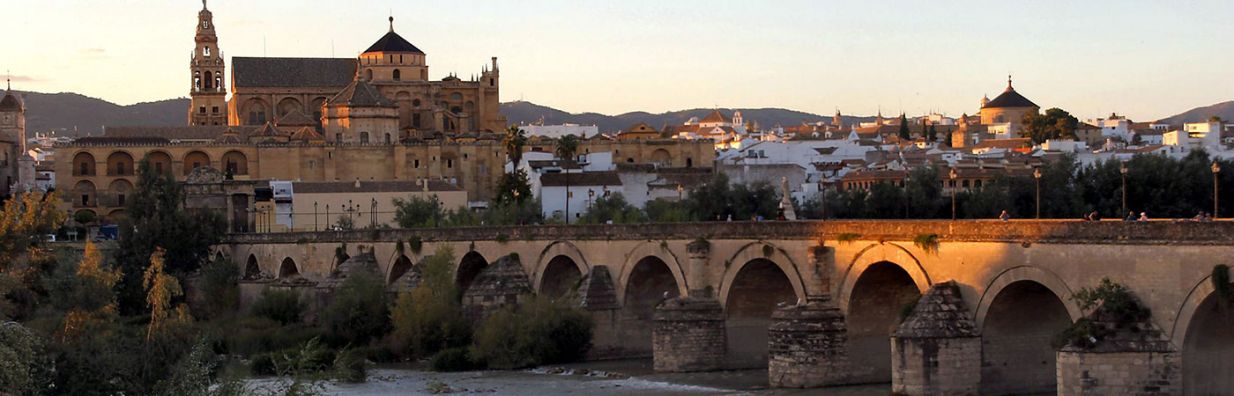
Most tours pass by famous landmarks, for example, the Mezquita, the Roman Bridge, and the Jewish Quarter. A full visit to the Mezquita usually requires a separate ticket.
What is a suitable tip for guides on free walking tours in Córdoba?
This is entirely up to you. We recommend that you consider a few factors, such as: what a conventional paid tour would have cost you, your evaluation of the guide and their style, the quality of the content and information, if the tour lived up to or surpassed your expectations, how much you enjoyed the experience and, of course, your budget.
Do the free tours in Córdoba include information about its multicultural history?
Yes, the tours highlight the influence of Arab, Jewish, and Christian cultures, which have left their mark on the city traditions.
Is the free tour in Córdoba accessible for all participants?
Most routes are accessible, but some streets in the historic center can be challenging to navigate, so you should check whether it suits you.
How can I book a free walking tour in Córdoba?
You can easily book the Córdoba free tour on this page. You need to choose the tour you like and make a reservation on the page with its description. However, you should do this in advance, as places are limited and there may not be one available on the date you need.
Discover a City Built by Many Civilizations
Cordoba breaks all the rules. Look, Romans built buildings, then Muslims added palaces, then Jews created this labyrinth of a quarter, and somehow it actually works. Sure, you can explore the city solo and just take photos of Mezquita-Catedral and Alcázar de los Reyes Cristianos all day. But without context from a local person during a free tour in Cordoba, you will leave the city and not want to return. Those stories from guides matter, especially since you are not obliged to pay for this information, as any tour on FREETOUR.com is tip-based.
Why Cordoba Works So Well as a Walking City
- Compact density. The historic center is huge, like, one of Europe's largest, but you can still walk end-to-end in maybe twenty-five minutes if you don't stop. Which you will, constantly, because every third doorway reveals another courtyard or hidden plaza.
- Multicultural layers. For example, the Puente Romano looks like a bridge. Just a bridge. Until someone explains to you how it connected Roman Baetica to the rest of the empire, how the Umayyad Caliphate reinforced it, and how it still carries foot traffic two thousand years later. Then it becomes a timeline bridge you can walk across.
- UNESCO hub. There are four separate designations: the Mezquita — the historic center — Medina Azahara outside town — the Patios de Córdoba as intangible heritage. Most cities would praise one. Cordoba just doesn't care and praises four.
- Intimacy. Calleja de las Flores is narrow enough that you could touch both walls simultaneously. That's how Cordoba really lives.
- Advance logic. Groups are kept small on purpose, and spots fill up fast. So, if you're planning a free walking tour in Cordoba through FREETOUR.com during spring or fall, it is better to book it the same day you book your hotel.
Cordoba as Three Connected Worlds
The Monumental Cordoba (Anchors of Power)
Okay, the Mezquita. Everyone shows up for it. But cameras lie, as this building doesn't translate to photos. What usually amazes people is the space itself, the way light filters through hundreds of columns with those striped red-and-white arches radiating outward like some impossible geometric forest.
The Alcázar de los Reyes Cristianos gets less attention, but those gardens cascading toward the Guadalquivir River are so enough. There are great views and fewer crowds.
Then there's the Puente Romano. It is two thousand years old and it is still standing after floods that wiped out neighborhoods, wars that leveled cities, and apparently endless waves of tourists. Thing's indestructible.
One important note here is that free walking tours in Cordoba usually cover the exteriors and historical context of these monuments, but you'll need a separate ticket for the Mezquita's interior. Anyway, your guide will tell you exactly when to go to avoid crowds (which honestly justifies the tip by itself).
The Cordoba of Coexistence (The Soul of the Judería)
Here's where things get real. The Judería isn't some sanitized historical recreation where everything's been Disney-fied to look "authentically medieval." People actually live here, in a neighborhood that just happens to hold evidence of La Convivencia — that rare moment when Muslim, Jewish, and Christian communities were exchanging ideas instead of, you know, the usual.
Both Maimonides and Averroes were born in this same cluster of streets. Two philosophers from different religions who shaped their thoughts probably bought bread from the same bakery.
The Synagogue is one of only three medieval synagogues left in all of Spain. Plasterwork and Hebrew inscriptions are still visible after centuries.
Walking tours in Cordoba really earn their value here. Your guide will show you that Islamic patterns decorate the Synagogue and explain how Jewish scholars translated Greek texts that Muslims had saved. All that is the proof that coexistence is actually possible.
The Intimate Cordoba (Patios and Hidden Lanes)
This is what the Cordoba tourists miss entirely, but not with FREETOUR.com and its free tours in Cordoba. The Patio de los Naranjos at the Mezquita's entrance shows you the city's whole philosophy. Those orange trees gave shade and fruit, sure, but someone also cared how they looked.
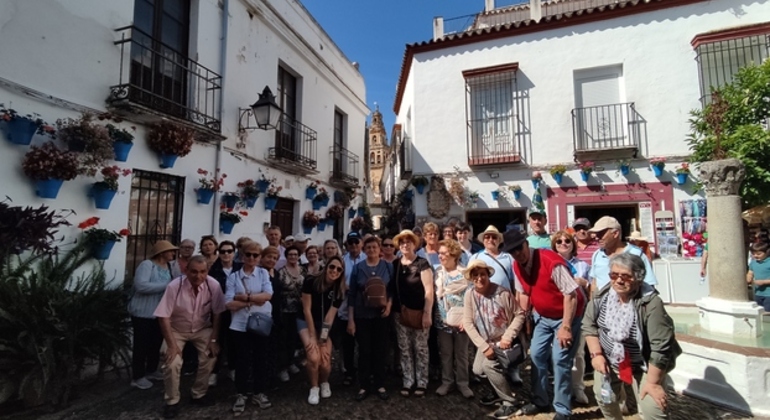
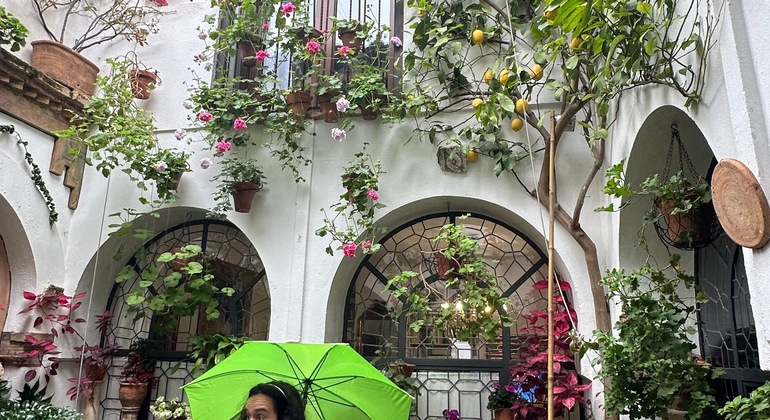
That mindset is everywhere — behind unremarkable doors across the old town, families have spent literal generations decorating their courtyards. Geraniums exploding off every surface, jasmine climbing the walls, hand-painted tiles, and little fountains. During the Fiesta de los Patios each May, these private spaces open up, and you finally understand what locals have always known: real luxury isn't marble monuments. It's making the place you live every day beautiful enough to sustain you.
Of course, a walking tour in Cordoba won't get you inside people's homes, but guides know the public patios that capture the same energy. They'll explain the UNESCO Intangible Cultural Heritage status too, as it's not just about the courtyards themselves, but the living tradition of maintaining them.
Storylines for Every Traveler: Choose Your Route
- For first-time visitors. First of all, you need the foundation story. The Mezquita and everything around it, the bridge, and enough Roman and Islamic background to understand why literally everyone spent two thousand years fighting over this place.
- For multicultural history buffs. Go all-in on the Judería, The Synagogue, and the Sephardic Heritage that rewrote medieval Spain. This is where the Multicultural Narrative stops being theory and becomes tangible. Streets are so narrow that you can picture scholars yelling philosophy debates across second-floor windows.
- For architecture lovers. Here, you can focus on how the city evolved without breaking. There is the same basic street layout surviving multiple empires, Islamic geometry bleeding into Christian buildings and Cordobán leather workshops still operating in structures that were already ancient ruins when they moved in.
- For atmosphere seekers. If it is you, then it is better to ignore the monument checklist entirely. Find the corners where tourists don't go. For example, chase that golden afternoon light through residential alleys. Or just let the neighborhood's rhythm speak for itself.
Why Cordoba is a City of Continuity, Not Fragments
Most old cities feel like someone played historical Tetris, like, a castle here, a church there, modern apartments in between, and old cafes every other one. Cordoba doesn't do that.
Everything connects. Streets, religious buildings, courtyards, river crossings — it's one continuous landscape that somehow survived two thousand years. There's no real boundary between "tourist zone" and "actual city" because people still live in old houses, cafes operate inside repurposed palace walls and the city evolved without severing its own roots.
Practical Logic: How to Plan Your Walking Tour
- Booking advantage. FREETOUR.com makes advance reservation so simple. Just book a tour early, as spots vanish surprisingly fast, especially in spring and fall.
- Accessibility alert. Be honest about your mobility. Most routes work fine since it's a walking city. But medieval streets mean uneven cobblestones, random steps, and passages barely wide enough for two people. Wheelchair users or anyone struggling with stairs should ask about specific route accessibility before committing!
- Evaluation-based tipping. A pay-what-you-wish model works here. Did your guide make the city really interesting for you? Answer your random questions without being condescending? Actually know the history? Please, thank them with a tip.
- Language & pace. Our guides have wildly different styles and know different languages. It can be academic lecturers, just storytellers, comedians, and even serious historians. Just read descriptions and pick the one you like.
Why Cordoba Feels Different from Other Andalusian Cities
Cordoba is really different from other Spanish cities. History here is per square foot. For example, stand on the Roman bridge and you'll spot Medina Azahara ruins in the distance. A five-minute walk gets you Salmorejo Cordobés served in a restaurant carved into old palace walls. Another five minutes and you're at the Synagogue, wrapping your head around how three religions built their masterpieces within shouting distance.
Walking tours in Cordoba will show you everything — the monuments, the Judería, the decorated courtyards still maintained today, and many more. You will not just absorb ancient facts. You will read a city that rewrote itself repeatedly while keeping its soul intact. That's worth your afternoon, minimum.

- Free Tours in 140+ countries!
- Trusted ratings & reviews!
- Free booking 100% guaranteed!
- FAQs about free tours in